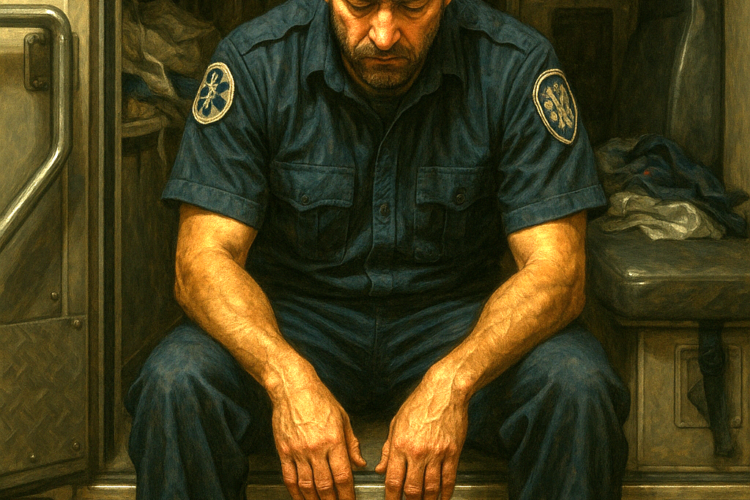

Writing Through the Wreckage: Memoir as a Pathway to Post-Traumatic Growth
Exploring Healing, Trauma, and the Transformative Power of Storytelling in the Wake of EMS and Combat Experience
Abstract
This article explores post‑traumatic growth (PTG)—the positive psychological transformations that can follow trauma—and integrates these concepts with the author’s personal journey while writing The Quiet After the Sirens. Drawing on sources like Boulder Crest Institute, Psychology Today, Healthline, Gift From Within, and peer-reviewed research, the piece defines PTG, explains mechanisms of growth, and situates memoir writing as both healing and service. Ultimately, it presents writing as a form of active recovery and invites readers to learn more about the memoir.
Thesis Statement
Through the lens of post‑traumatic growth science, writing The Quiet After the Sirens has become not only a memoir, but a healing practice—a way to process trauma, reconstruct meaning, and catalyze growth in myself and others.
Post‐Traumatic Growth and the Healing Power of Story
Trauma alters the structure of a life, fragmenting identity, worldview, and emotional continuity. Yet for some, the aftermath of trauma becomes a site of unexpected transformation. This phenomenon, known as post-traumatic growth (PTG), refers to the positive psychological changes that can occur as individuals struggle with highly challenging life circumstances (Tedeschi and Calhoun). Unlike resilience, which implies a return to baseline functioning, PTG suggests a profound and lasting shift in personal outlook, relationships, and existential meaning.
This thesis argues that the act of writing memoir—specifically, The Quiet After the Sirens, a narrative drawn from my experience as a combat veteran and EMS lieutenant—functions as a mechanism for post-traumatic growth. Through the processes of cognitive reappraisal, narrative construction, and service to others, memoir becomes not merely a record of trauma but a crucible through which meaning, integration, and healing are forged.
Theoretical Framework: Defining Post-Traumatic Growth
Tedeschi and Calhoun’s foundational theory of PTG identifies five primary domains of growth: (1) an increased appreciation for life, (2) deeper interpersonal relationships, (3) a sense of increased personal strength, (4) recognition of new possibilities, and (5) spiritual or existential transformation (“Post-Traumatic Growth,” Psychology Today). The emergence of these outcomes does not eliminate the pain of trauma; rather, PTG coexists with distress and suffering, often surfacing only after deliberate reflection and emotional processing.
Empirical studies have validated this theory. According to research conducted by the U.S. Department of Veterans Affairs, approximately 60% of trauma-exposed veterans and 86% of veterans with PTSD reported experiencing moderate to high levels of post-traumatic growth (VA Research Brief). Similar findings have been replicated in populations facing life-threatening illness, bereavement, natural disaster, and interpersonal violence (Taku et al.; Lockett).
PTG is fostered by a combination of psychological and environmental factors: cognitive processing, emotional expression, social support, and narrative disclosure are all considered essential components (Boulder Crest Institute; Gift From Within). In particular, storytelling and expressive writing serve as avenues through which survivors make meaning of their experiences and reintegrate their identities.
 Memoir as Mechanism: The Quiet After the Sirens
Memoir occupies a unique space within trauma studies. As a genre rooted in memory and self-examination, it allows for the restructuring of traumatic experience into coherent narrative. In the case of The Quiet After the Sirens, the process of memoir writing mirrored the mechanisms identified in PTG literature:
-
Cognitive Processing – By re-entering scenes from the battlefield and ambulance, I was able to recontextualize events that once held only pain. Memory became an object of study, not just a source of suffering.
-
Narrative Disclosure – The act of writing allowed for emotional release. Experiences long buried beneath professionalism and silence were given voice, disrupting the internalized expectation of emotional stoicism often cultivated in EMS and military culture.
-
Service and Contribution – Perhaps most significantly, memoir offered a way to serve others. My narrative, once private and isolating, became a communal artifact. In sharing my story, I opened space for others to see themselves, to recognize that healing is possible—and that they are not alone.
Boulder Crest Institute likens post-traumatic growth to rebuilding a city after an earthquake. Trauma, they argue, demolishes core assumptions about the world, the self, and safety. But in the rubble lies the opportunity to construct a new framework—stronger, more honest, and deeply human. Memoir writing, in this sense, becomes both blueprint and scaffolding for that reconstruction.
Integrating Holistic Healing
PTG is not exclusively a psychological process; it is deeply holistic. As noted by the American Addiction Centers, effective trauma recovery involves the integration of mind, body, and spirit. Practices such as meditation, breathwork, artistic expression, and physical movement complement narrative work by reinforcing embodiment and present-moment awareness.
Healthline emphasizes the value of “approach-based” coping—acknowledging and confronting traumatic material rather than avoiding it (Lockett). Similarly, Health.com underscores the role of emotional acceptance, self-compassion, and existential reflection in catalyzing growth. These approaches align with both the content and the process of memoir writing, which demands presence, vulnerability, and sustained emotional engagement.
Organizations like Gift From Within provide trauma survivors with tools, community, and encouragement to share their stories—not only as a means of personal healing but as a collective antidote to isolation and shame. In this way, narrative becomes a tool of reclamation: of one’s life, identity, and capacity for hope.
The writing of The Quiet After the Sirens has been both an act of remembrance and a practice of reconstruction. As trauma fragmented my worldview, memoir provided a path back—though not to who I was before, but toward who I could become. In alignment with the science of post-traumatic growth, this narrative did not erase the pain I carry. Instead, it helped transform that pain into meaning, connection, and—perhaps most importantly—purpose.
Memoir, then, is not merely a literary endeavor. For trauma survivors, it can serve as a vessel for post-traumatic growth. Through storytelling, we name the unspeakable. Through reflection, we rebuild meaning. And through service, we give others permission to heal.
Writing as Post‑Traumatic Growth in The Quiet After the Sirens
Writing this memoir embodied PTG:
- Cognitive processing: crafting scenes, reframing experiences into narrative.
- Disclosure: giving voice to invisible battles and silent aftermaths.
- Service: offering shared understanding to readers, building empathy and support.
Through writing, I re‑engaged fragmented beliefs, found strength in vulnerability, and opened pathways to healing.
Conclusion & Invitation
Trauma doesn’t just break—it can also transform, if we meet it with reflection, openness, and connection. The Quiet After the Sirens is more than a book—it is part of that transformation, one that mirrors PTG science and offers real, imperfect growth.
👉 To read more and view an excerpt, visit: Quiet After the Storms excerpt.
Works Cited
“About Gift From Within.” Gift From Within, Gift From Within, https://www.giftfromwithin.org/about/. Accessed 15 July 2025.
Boulder Crest Institute for Posttraumatic Growth. “Understanding Posttraumatic Growth.” Boulder Crest Institute, https://bouldercrest.org/research-resources/what-is-posttraumatic-growth-ptg/. Accessed 15 July 2025.
“Post‑Traumatic Growth | Psychology Today.” Psychology Today, https://www.psychologytoday.com/us/basics/post-traumatic-growth. Accessed 15 July 2025.
Tedeschi, Richard G., and Lawrence G. Calhoun. “Post‑traumatic Growth.” Wikipedia, https://en.wikipedia.org/wiki/Post-traumatic_growth. Accessed 15 July 2025.
Lockett, Eleesha, M.S. “Understanding Avoidance in PTSD: How to Recognize and Treat It.” Healthline, 3 Nov. 2023, https://www.healthline.com/health/mental-health/ptsd-avoidance. Accessed 15 July 2025.
“Post-traumatic Growth in People Living with a Serious …” PubMed, https://pubmed.ncbi.nlm.nih.gov/19350430/. Accessed 15 July 2025.
“Post‑Traumatic Growth: How to Heal and Grow from Our Toughest Moments.” Health.com, 25 June 2020, https://www.health.com/condition/stress/how-to-heal-and-grow-from-our-toughest-moments. Accessed 15 July 2025.
VA HSR&D Research Brief. American Addiction Centers – Holistic Rehab Guide, https://americanaddictioncenters.org/rehab-guide/holistic. Accessed 15 July 2025.
Gift From Within. Gift From Within – PTSD Resources for Survivors and Caregivers, https://forum.psychlinks.ca/threads/gift-from-within-ptsd-resources-for-survivors-and-caregivers.9937/. Accessed 15 July 2025.